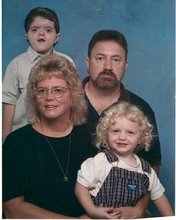
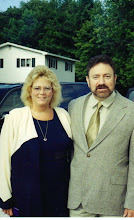
Gary Puleio

Gary was killed on the job at a concrete plant on August 15, 2001. He had been employed there only 3 months as a non-union cement truck driver and fell 25 feet to his death, from a cement tower, while shoveling gravel off the hopper to clean it. The company claimed Gary just wandered up there on his own, without wearing any safety equipment, at the end of his driving shift rather than being assigned this dangerous task because he was the “new man”. OSHA accepted this implausible story and after admitting no wrong doing, the company paid a $6000 fine for REPEAT violations for not posting danger signs at a confined space and not implementing measures to prevent unauthorized entry. This company had multiple serious violations issued only months before Gary was killed which were informally settled with reduced fines. Corporations routinely “negotiate” with OSHA to downgrade fines through a process called “abatement. ” Aggrieved families of dead workers have no such access to OSHA, face hurdles in obtaining information under the Freedom of Information Act, have their concerns condescendingly dismissed and ultimately are told that no further action can be taken once 6 months have passed since the “alleged violation”. .

Gary Anthony Puleio

Gary Anthony Puleio

Gary Puleio's Tower

Blogger/writer Mick Arran wrote about Gary on his site "Matewan" Matewan at Gary Puleio I have added his writings to Gary Puleio's Tower>

Tuesday, July 31, 2007

Meadville Redi-Mix/Kebert


Meadville Redi-Mix
19824 Cochranton Rd
Meadville , PA 16335
814-724-7777

Saturday, July 14, 2007

Workers' Memorial Day Presentation Pittsburgh, PA 4/28/2004

Hello, My name is Dr. Donna Spadaro. Thank you for the opportunity to speak at Worker’s Memorial Day. I can think of no more honorable way to remember my brother, Gary Puleio, who was killed on the job than by becoming involved in the struggle for improved workplace safety.

Our family was devastated when Gary was killed at Meadville Redi-Mix Concrete in 2001. Gary, had been employed there only 3 months as a cement truck driver. He fell 25 feet to his death, from a cement tower, while shoveling gravel off the hopper to clean it. The company claimed Gary just wandered up there on his own at the end of his driving shift rather than being assigned this unpleasant task because he was the “new man”.

Our grief was compounded when this implausible story was passively accepted by OSHA. After admitting no wrong doing, the company paid a $6000 fine for REPEAT violations for not posting danger signs at a confined space and not implementing measures to prevent unauthorized entry.

From the OSHA website, we learned that Redi-Mix had multiple serious violations issued only months before my brother was killed. These were informally settled with reduced fines called “abatement” only a few weeks before his death. Our concerns were condescendingly dismissed by OSHA and over a year later we were told no further action could be taken anyway as OSHA requires that any citations or penalties must be issued within 6 months of an “alleged violation” as they euphemistically call the neglectful killing of a new inexperienced worker.

Gary’s case illustrates the vast discrepancies that exist between workers access to OSHA and that of corporations. Corporations routinely “negotiate” with OSHA to downgrade fines through this process called “abatement” This process combined with inadequate workers’ compensation laws make it impossible to hold negligent employers criminally and civilly liable.

OSHA fines are not issued as punishment and no amount of money can ever compensate for the loss of life. These were the tired clichéd excuses OSHA gave our family to justify the paltry slap on the wrist fine issued for my brother’s death. However the issuance of trivial fines and citations results in no accountability nor any acknowledgement of responsibility on the part of the offending company.

Consider these appalling facts:

1. 1. In the past 20 years, 170,000 workplace fatalities occurred but only about 1700 were considered by OSHA to be due to the “willful” violation of safety laws. Without a “willful” designation it is difficult for prosecutors to make a case that an employer was criminally liable and civil suits pursued by families are not likely to succeed.
2. 2. The percentage of cases being downgraded from “willful” to less serious violations has been rising steadily. In 2001, the year my brother was killed, 60 percent of all cases were downgraded.
3. 3. Of the mere 1700 “willful’ cases out of 170,000 fatalities in the past 20 years, only 196 were referred to prosecutors. In these 20 years there were only 81 convictions and only 16 carried jail sentences.
4. 4. It is a MISDEMEANOR to kill a worker by willfully violating safety laws. The maximum sentence is 6 months in jail.

I have come to realize that my brother’s death was not just an isolated case of “bad luck”. The statistics I just cited amount to something quite worse—a litany of employer indifference coupled with the inaction and timidity of OSHA.

Here is the scope of the problem—in 2002, 4.7 million workers were injured, 5500 were killed and an estimated 50,000 died from occupational diseases. On an average day, 150 workers lose their lives as a result of workplace injuries and diseases and another 12,00 are injured.

OSHA does not have the funding or staff to adequately oversee the safety of the 100 million workers under its jurisdiction. OSHA’s current budget of $475 million amounts to about $4 dollars per worker. Federal OSHA has only about 900 safety inspectors and can only inspect workplaces on average once every 100 years.


The Bush administration has done nothing to correct this situation. It has overturned or blocked dozens of workplace protections and weakened job safety programs with such actions as repealing the ergonomics standards. It has killed dozens of worker protection measures including rules on cancer causing substances, reactive chemicals and infectious diseases like TB. The Bush administration has even refused to issue a rule requiring employers to pay for personal protective equipment, particularly important for immigrant and low wage workers.

While trying to dismantle worker safety and health training programs, the Bush administration has increased funding for outreach to employers. It favors employer voluntary programs over enforcement and excludes workers and unions.

Employer groups are fighting every attempt to regulate any hazard, no matter how serious. This anti-regulatory ideology allows no room for common sense regulation to protect workers and the community. Along with corporations, the under-regulated insurance industry continues to campaign for legislation to cut workers compensation benefits.

Thank you for allowing me to remember my brother Gary today. I can never forget the terrible circumstances surrounding his death nor the insulting story told by Redi-Mix about how he just “wandered up there on his own”. But what stands out most painfully, is the inadequacy of the regulatory system designed to protect workers and the injustices of the current system. In the words of Dr. Martin Luther King: “in the end we will remember not the words of our enemies but the silence of our friends.”

Workers Memorial Day 2004 is the day we call for an end to the “silence” of the very agencies assigned to protect workers from these injustices. We must fight to make workplaces safer. We must toughen laws that make the willful killing of workers a felony not a misdemeanor. The downgrading and abatement of violations until they amount to little more than a meaningless “slap on the wrist” must be stopped. Our country cannot become a low wage economy where safety is ignored and dead workers are an accepted cost of doing business.

As we mourn and remember the workers here at Worker’s Memorial Day, let us rededicate ourselves to this fight.

Donna Puleio Spadaro, MD

Friday, July 13, 2007

Indiana U. of PA Workers' Safety Conference Presentation

Hello, my name is Donna Puleio Spadaro. Thank you for inviting me here to speak to you today about workplace fatalities. This subject has been of critical importance to me since my brother was killed on the job. I am grateful to have an opportunity to honor my brother’s life and share with you my experiences since his death through this forum.

I come to talk to you not as someone with a vast amount of experience in the intricacies of safety laws and guidelines, but to share with you my personal experience in dealing with OSHA and the knowledge I have gained in the past 2 years and 9 months since my brother was killed.

On 8/15/01, my brother , Gary Puleio, fell 20 feet to his death from a concrete tower at Meadville Redi-Mix , where he had been employed only three months as a truck driver. He was up on the tower alone, not wearing any safety equipment, performing a job outside of the scope of his truck driving responsibilities. He had told his wife the day before he died that he had to go up and shovel gravel off the hopper at the end of his driving shift.

Redi-Mix’s operation manager was quoted in the Meadville Tribune (11/15/01) that Gary “took it upon himself” to go up to the tower alone and that the reason Gary died was a “mystery” to him. T he West Mead Township police report of the accident noted that the OSHA compliance officer requested a copy of their report because there were discrepancies between what Redi-Mix told him and what the police were told.

To further explore this “mystery” and these discrepancies and to inquire about attending an “informal conference” concerning this case that was noted in the OSHA citation to Redi-Mix, I wrote to John Stranahan, Erie Area OSHA Director on 10/11/01 and again on 10/28/01. Although he never answered my letters and never informed me of the scheduling of the conference, he quickly and callously dismissed my concerns about the discrepancies as “minor” in the Meadville Tribune (11/15/01) .

OSHA claimed it could not determine if, as a new employee, Gary was assigned the unpleasant “scut work” task of cleaning the tower at the end of his driving shift or if
he just “wandered up there on his own” as implausibly claimed by Redi-Mix. It seemed OSHA just perfunctorily accepted the egregious claims of an individual who would have financial incentive to minimize any wrongdoing. This evidently served as an excuse for the lack of safety equipment and supervision.

Therefore, the company was cited for repeat violations for not posting danger signs at a confined space and not implementing measures to prevent unauthorized entry. After admitting no wrongdoing , Redi-Mix paid a $6000 fine.

Under the Freedom of Information Act (FOIA) , I did obtain the “releasable” files on this case. OSHA did not release the records in their entirety, citing exemptions to protect confidential sources from “ discrimination and retaliation.” I can certainly appreciate the consequences workers might face if they disagreed with management about the “mysterious” nature of Gary’s death. These “releasable files” contained information that I believe refuted Redi-Mix’s claim that Gary “ wandered up there on his own” The records showed that drivers, including my brother, were sent to shovel gravel off the cement tower.

In a letter, dated 11/01, from Richard Soltan, Regional OSHA Director, that accompanied these “releasable” records, there was NO mention of how to get a case reviewed when the conclusions are inaccurate and unsatisfactory. Soltan stated I had a right to appeal the FOIA denial so I pursued that approach as a first step to get this case reevaluated.

In 1/02, I received a letter from Bruce Cohen, Deputy Associate Solicitor for Legislation and Legal Counsel, stating that the number of appeals was “very substantial” and that it may take a long time.

My appeal to obtain the complete records was denied by Robert Shapiro, the Associate Solicitor for Legislation and Legal Counsel of the US Department of Labor. In a letter of 4/02, he did state that a review of the substantive issues would be performed by a Richard Fairfax, Director of Enforcement Programs.

In September, I received a letter, sent FIVE MONTHS after Fairfax was asked to review this case by Shapiro and 13 months after my brother was killed. He stated that no additional action can be taken because the OSH Act requires that any citations or penalties must be issued within 6 months of the “alleged violation”. I wrote to Mr Fairfax and asked , retrospectively, how I could have gotten this case reviewed in a more timely manner and in light of this 6 month cut off if it was typical to have a FIVE month delay in responding to a request for a review. Almost 2 years have gone by since I sent that letter, so I am not expecting an answer.

Thus even with extreme diligence, I had no way of effectively challenging the fatuous conclusions that misstated the problem.

Later, I discovered that one could do an “establishment search” on the OSHA website. I discovered that Meadville Redi-Mix had undergone an OSHA inspection on 4/23/01. On 6/25/01, as a consequence of this investigation, 7 “serious” and 7 “other than serious” violations were issued. On July 18, 2001, less than 1 month before my brother was killed, the 2 “serious” violations that were cited as “repeats” when my brother was killed were settled informally by abatement. One for a mere $1300 fine (negotiated down from 3000) and the other for no monetary amount.

In contrast, the “alleged violators” seem to be quite skillful at negotiating with OSHA to get penalties reduced. While I was going through all this, I was outraged to read that 2 of the OSHA citations in the death of Paul Corsi at the convention center truss collapse of 2002 were reclassified as “other than serious” and one dropped completely resulting in a reduction of fines to the Dick Corporation to a paltry $12,000.

This seemed particularly inappropriate to me since Allegheny County Coroner Cyril Wecht had just recommended that the Dick Corporation be charged with involuntary manslaughter for “mistakes that more than rise to the level of recklessness and grossly negligent conduct.” It was at this time that DA Zappalla was to begin an investigation based on Dr. Wecht’s recommendation.

I became very interested in the Corsi case because certainly the conclusions of Dr. Wecht differed greatly from those of OSHA. While OSHA was able to stall me and dismiss my concerns as due to inexperience or emotional distress, that couldn’t be done to Dr. Wecht. Ultimately through Zappalla’s investigation, I thought I would find out first hand what happens when OSHA conclusions are reputed. Paul Corsi’s death would not be swept under the rug like that of my brother Gary.

In Jan/03 near the anniversary of Paul Corsi’s death, I wrote a letter to the editor of the PG asking about the status of the Zappalla investigation. It was not published. I sent a copy of the letter to Pat Corsi, the mother of Paul Corsi and to Dr. Wecht to show them that there are people who care about worker safety and justice despite the seeming indifference of the PG. Dr. Wecht wrote back stating my letter was “ well- written, factually correct and should have been published”.

I sent a copy to Zappalla who replied that these matters take “considerable time for review”. That may indeed be true but it would appear that it took an appallingly brief period of time to allow the Dick Corporation to “negotiate” the fines in this case down. And in contrast to the seemingly unlimited time Zappalla has to prepare his inquiry, is the limited access and time constraints families face when they attempt to challenge OSHA conclusions. Recall I was told that no further action could be taken in my brother’s case because the OSH act requires that any citations and penalties must be issued within 6 months of the “alleged violation”.

Finally, in Sept 2003, 18 months after the truss collapse, Zappala chose not to file criminal charges and in fact blamed the iron workers themselves for the accident. He egregiously concluded that since the cost involved to rectify the mistake of incorrect nut usage would have been negligible, this ‘proved’ there was no evidence that the Dick Corporation was trying to save money or time by their actions and this then evidently excused them from any criminal responsibility.


The Corsi case, like my brother’s, illustrates the vast discrepancies that exist between workers access to OSHA and that of corporations. Corporations routinely “negotiate” with OSHA to downgrade fines through this process called “abatement” This process combined with inadequate workers’ compensation laws make it impossible to hold negligent employers criminally and civilly liable.

OSHA fines are not issued as punishment and no amount of money can ever compensate for the loss of life. These were the tired clichéd excuses OSHA gave our family to justify the paltry slap on the wrist fine issued for my brother’s death. However the issuance of trivial fines and citations results in no accountability nor any acknowledgement of responsibility on the part of the offending company.

Consider these appalling facts summarized from a series of articles published in the NYT by David Barstow.

In the past 20 years, 170,000 workplace fatalities occurred but only about 1700 were considered by OSHA to be due to the “willful” violation of safety laws. Without a “willful” designation it is difficult for prosecutors to make a case that an employer was criminally liable and civil suits pursued by families are not likely to succeed.
The percentage of cases being downgraded from “willful” to less serious violations has been rising steadily. In 2001, the year my brother was killed, 60 percent of all cases were downgraded.
Of the mere 1700 “willful’ cases out of 170,000 fatalities in the past 20 years, only 196 were referred to prosecutors. In these 20 years there were only 81 convictions and only 16 carried jail sentences.
It is a MISDEMEANOR to kill a worker by willfully violating safety laws. The maximum sentence is 6 months in jail.

I have come to realize that my brother’s death was not just an isolated case of “bad luck”. The statistics I just cited amount to something quite worse—a litany of employer indifference coupled with the inaction and timidity of OSHA.

Here is the scope of the problem—in 2002, 4.7 million workers were injured, 5500 were killed and an estimated 50,000 died from occupational diseases. On an average day, 150 workers lose their lives as a result of workplace injuries and diseases and another 12,00 are injured.

OSHA does not have the funding or staff to adequately oversee the safety of the 100 million workers under its jurisdiction. OSHA’s current budget of $475 million amounts to about $4 dollars per worker. Federal OSHA has only about 900 safety inspectors and can only inspect workplaces on average once every 100 years.

To put this in perspective, the cost of war in Iraq will approach 174 BILLION if Congress appropriates the 25 BILLION requested by the White House.


The Bush administration has done nothing to correct the under funding and understaffing of OSHA. In fact it has aggressively taken actions to worsen it.

In March of 2001 Bush killed the nation’s first standard addressing repetitive stress injuries which over 1,8 million workers are subject to each year.
After the Sept 11, 2001 terrorist attack on the World Trade Center, Bush pressured the EPA to tone down potential health hazards like exposure to asbestos and smoke resulting from the collapse. In August 2002 Bush then refused to release funds Congress approved to monitor the health of workers who cleaned up at Ground Zero as well as for use in improving the communications systems for police, firefighters and EMS.
In 2002 Bush formed a national advisory committee on ergonomics. This committee did NOT contain an equal number of union and management representatives. It was stacked 7 to 2. The Bush administration also has formed “alliances” in specific industries like meatpacking, airlines, printing and others to study workplace safety and NONE include union or workers’ representatives. As the Corsi case and my brother’s case illustrate, industry already has far more access to OSHA than workers and their families even without the existence of these management stacked “alliances”.
In May 2003, Bush withdrew a proposed rule that would have established workplace exposure to tuberculosis. The proposed rule would have required airborne disease control measures based on the recommendations of the CDC and the World Health Organization.
The Bush administration has killed dozens of worker protection measures including rules on cancer causing substances and reactive chemicals The Bush administration has even refused to issue a rule requiring employers to pay for personal protective equipment, particularly important for immigrant and low wage workers.

If all this weren’t bad enough, House Republicans just passed bills that will further weaken OSHA.

HR2728, Contesting Citations, would extend the time period allowed to challenge a citation by employers. Recall I was told by OSHA that no further action could be taken in my brother’s case because all citation and penalties must be issued within 6 months of the “alleged violation” as they euphemistically called the neglectful killing of an inexperienced worker.
HR 2731, Attorney Fees, which would require OSHA to pay ALL court cost when it loses a case against small business. Business associations already have far more money to spend on appeals than OSHA has to defend them so this stacks the deck even farther.

HR 2729 and 2730 would expand the OSHRC and allow its decisions to trump those of OSHA itself.

Fortunately there are efforts to strengthen workers’ safety. Last year Senator Jon Corzine(D-NJ) and his house counter part Representative Major Owens(D-NY) introduced S. 1272, The “Wrongful Death Accountability Act” that would increase the criminal penalty for willfully violating workplace safety and causing the death of a worker from the current one of 6 months to 10 years, changing it from a misdemeanor to a felony.

Senator Kennedy recently pledged support for this legislation as well. On May 12, 2004 Congressman Owens held a hearing that highlighted witnesses stories. One of the witnesses was Holly Shaw, a young widow and teacher from Philadelphia who I have been privileged to get to know through phone and email exchanges this past year. She shared with me her testimony and it is now posted on the “Confined Spaces” website.

It is more eloquent and moving than anything I can say to you today. Let me share with you her conclusion:

According to the fines OSHA levied on Scott's company, Scott's life was worth $4,950.00. The company owner was not prosecuted. If he had been charged criminally, he would have been convicted of a misdemeanor. That's it. Not a felony. He could walk away, and live his life. My husband didn't walk away. Scott left behind a wife, three sons (two sons from our marriage, and one from a previous marriage)., two sisters, one brother, a mother, and many family members and friends who loved him tremendously.A bill is being introduced that will raise the fines that OSHA can levy against a company, when there is an accident. The company can be criminally prosecuted, and can be convicted of a felony. I believe it is imperative that a message is sent that a worker's life is worth more than a couple of dollars. Companies that do not practice safety precautions should be convicted, and sent to prison. They must be punished.As a teacher and as a parent, I know that it is important that a child understand there are consequences to their actions, and they must accept responsibility for what they have done. Adults must face their responsibility, and must be held accountable for their actions. Please, don't let another family suffer as we have. The more that companies are actually punished, the more they realize they must practice workplace safety, and must protect their workers.


Thank you for allowing me to remember my brother Gary today. I can never forget the terrible circumstances surrounding his death nor the insulting story told by Redi-Mix about how he just “wandered up there on his own”. But what stands out most painfully, is the inadequacy of the regulatory system designed to protect workers and the injustices of the current system. I will close with the words of Dr. Martin Luther King: “in the end we will remember not the words of our enemies but the silence of our friends.”

Thank you


Donna Puleio Spadaro, MD

Thursday, July 12, 2007

Eulogy Gary Anthony Puleio

GARY ANTHONY PULEIO
4/13/1948 8/15/2001

It is a privilege to speak to you today of the life of my dear brother, Gary Puleio. He was a good, honorable man whom we all loved and respected.

He lead a life of quiet dignity, giving of himself and never asking for anything in return. Because of his reserved selfless nature, perhaps we never knew all about the person he was. Thus, I am honored to tell you of the life of my dear brother, Gary Puleio.

Over the past day, as we looked sorrowfully upon his broken body and tried to take in the horrible tragedy that befell him, many thoughts have entered our minds and we have sought the solace of God and each other to understand this.

By better understanding Gary’s life, we can gain the strength and courage to go on with our lives.

Gary was born in 1948 in McKeees Rocks, Pa, the son of a steel worker. Our parents, Donald and Mary, had just lost their infant son Donald, Jr. not but two years earlier and were still recovering from their loss. Despite this they welcomed Gary with love and joy. His older siblings, Paul and Marion, loved their sweet little brother and took him everywhere all the time calling him “Tag-a-long”.

When Gary was 12 , he had a new baby sister—me. He gladly took on the new role of big brother. No sister had a finer, more loving brother than I.

Gary came of age in the 1960’s, a turbulent time in American society. Gary’s circumstances were modest and he was never afforded the luxury of frivolity. Even as a young man, he shouldered many burdens and responsibilities.

Upon graduation from Stowe High School in 1966, Gary entered Duquesne University. Money remained very tight and Gary had to work long hours to afford to attend the university. Gary bore this heavy work burden without complaint.
Despite many hurdles, Gary obtained a degree in Business Administration from Duquesne.

Economic circumstances forced Gary to continue to hold a series of manual labor jobs. He was well respected by his fellow workers and tried to improve their lives through his interest in the union.

All this time, he supported and aided his family and friends. I, like many others in this room, owe Gary a debt I can never repay. He helped me all through my schooling from elementary school through medical school. He was always there whenever and wherever he was needed. He never refused anyone help.

I had a high school assignment once that required that I write about someone I considered a hero. I chose my brother , Gary, then . All these years later, I can still think of no better choice.

Our father succumbed to cancer in 1978. Gary was only 30 years old when he lost his father but he bore his sorrow with quiet dignity. He remained strong and helped his widowed mother and siblings overcome their grief.

In 1983, he married Linda. Gary and Linda welcomed everyone in their newly established home. They shared a love of animals. Gary’s kind and giving nature extended to his pets. He truly loved and cared for all creatures.

In 1991, our mother died suddenly and unexpectedly; Gary again was our family’s strength. That year, 1991, also marked the birth of Gary and Linda’s son Donald. Donald’s early years were very tough- Linda and Gary made many trips to Children’s Hospital in Pittsburgh. They never complained nor despaired- their faith in God and each other sustained them. Through their love and good care Donald grew and thrived.

In 1998, they were blessed with a second son, Gary Jr. Gary now gladly took on the role of a 50 year old new dad. Both his boys were the pride of his life.

He worked very hard for his family. He endured fatigue, pain and exhaustion to provide for those he loved. Even with this workload, he always was there to help others when they needed him.

In the midst of this hard toil, a terrible accident befell Gary. He died while working to provide for his family—indeed a hero’s death.

His body is now broken but his spirit shall never be. He will be remembered forever by those who loved him. God will grant him eternal peace and happiness for all the good he has done during his short life that ended so tragically.

Good bye dear Gary. We love you.

Donna P. Spadaro MD

Wednesday, July 11, 2007

Meadville RediMix OSHA Establishment Search

Establishment search Meadville Redi-Mix
#303706683 of 8/16/2001 is Gaary's "accident"
Next inspection occurs FOUR years later in 2005

CLICK ON PAGE TO ENLARGE
CLICK ABOVE LINK TO GO TO OSHA WEBSITE


undefined

Tuesday, July 10, 2007

Meadville Redi-Mix Inspection Detail 4/2001


Inspection Detail Meadville Redi Mix 4/2001

In April 2001, 4 months before Gary Puleio was killed at Meadville Redi-Mix, the company was cited for NUMEROUS SERIOUS VIOLATIONS. Although serious, some violations carried NO PENALATIES and others were negotiated down aand "discounted".

Monday, July 9, 2007

OSHA Inspection Detail Gary Puleio's Death

Redi-Mix paid $6000 for "repeat" violations involving Gary's death.
Click on link above to go to OSHA Establishment page
Click Pages below to enlarge and review details


Inspection Detail GARY PULEIO'S DEATH

Gary Puleio's death was a "repeat violation." It was NOT deemed "wilfull" nor "serious" by OSHA. Meadville Redi-Mix paid a $6000 fine and ACCEPTED no wrong doing.


8/27/07

As my brother, Gary Puleio, was killed at Meadville Redi-Mix Concrete on 8/15/2001, I am painfully familiar with Kebert Construction’s history of previous violations.
He had been employed there as a cement truck driver and fell 25 feet to his death, from a cement tower, while shoveling gravel off the hopper to clean it. OSHA accepted Redi-Mix’s claim that Gary just “wandered up there on his own” rather than being assigned this task, and after admitting no wrong doing, the company paid a $6000 fine for REPEAT violations for not posting danger signs at a confined space and not implementing measures to prevent unauthorized entry. This company had multiple serious violations issued only months before Gary was killed which were informally settled with reduced fines.
OSHA has recently found 3 serious violations in its investigation of July’s “runaway wrecking ball” incident at Allegheny College and is proposing total fines of $7500 for Kebert Construction. While OSHA regulations propose a mandatory penalty of up to $7000 for each serious violation, the penalties may be adjusted downward “based on the employer’s good faith, history of previous violations, the gravity of the alleged violation, and the size of the business”. OSHA is proposing a penalty for each violation listed on the citation of $2500 making the total penalty $7500. Now that the citation is issued, the employer can request an informal meeting to discuss the case and enter into settlement agreements.
Corporations routinely “negotiate” with OSHA to downgrade fines through a process called “abatement” Aggrieved families of dead workers have no such access to OSHA.
In the past 20 years, 170,000 workplace fatalities occurred but only about 1700 were considered by OSHA to be due to the “willful” violation of safety laws. Without a “willful” designation it is difficult for prosecutors to make a case that an employer was criminally liable and civil suits pursued by families are not likely to succeed. The percentage of cases being downgraded from “willful” to less serious violations has been rising steadily. In 2001, the year my brother was killed, 60 percent of all cases were downgraded. Of the mere 1700 “willful’ cases out of 170,000 fatalities in the past 20 years, only 196 were referred to prosecutors. In these 20 years there were only 81 convictions and only 16 carried jail sentences.
It is a MISDEMEANOR to kill a worker by willfully violating safety laws. The maximum sentence is 6 months in jail.
OSHA fines are not issued as punishment and no amount of money can ever compensate for the loss of life. However the issuance of trivial fines and citations results in no accountability nor any acknowledgement of responsibility on the part of the offending company.

Donna Puleio Spadaro, MD

Sunday, July 8, 2007

Meadville Tribune 8/16/2001

August 16, 2001


Man dies after falling 25 feet
By Mary Spicer
MEADVILLE TRIBUNE

An industrial accident at Kebert Construction Co., 19824 Cochran-ton Road, Meadville, took the life of Gary Puleio, 53, of 5568 Autumnwood Drive, Cochranton, Tuesday afternoon.

Puleio died after falling 18 to 20 feet into an empty mixing tower at the Cochranton Road facility. According to Crawford County Coroner Patrick McHenry, Puleio was working on top of the mixing tower, shoveling material inside, when he fell. Death occurred at 3:15 p.m.

After rappelling into the interior of the tower, rescue personnel used a pulley system to lift Puleio to the platform at the top of the tower, where he was pronounced dead by McHenry. An autopsy will be conducted today in Erie to determine the cause of death.

Meadville Fire Department's aerial ladder truck was used to bring the body to the ground. By 4:30 p.m., the task was complete.

The U.S. Department of Labor Occupational Safety and Health Administration has been notified, McHenry said.

Emergency and rescue personnel at the scene included West Mead Police Department; Meadville Central Fire Department Rescue 7 and Aerial 9 units; Meadville Emergency Medical Service; and West Mead I and West Mead II volunteer fire departments.


--------------------------------------------------------------------------------

back

--------------------------------------------------------------------------------

Home | Classified | Births | Deaths | Sound Off | Links | Lottery | Church | Area Events | TV Listings | Subscribe | National News | Contact Us

--------------------------------------------------------------------------------


All contents © copyright 2001 The Meadville Tribune. All rights reserved worldwide.

Saturday, July 7, 2007

Erie Times News 8/16/2001 Worker Dies at Meadville Concrete Plant

Back to: http://ge2.us.publicus.com/apps/pbcs.dll/artikkel?SearchID=73072358943062&Avis=GE&Dato=20010816&Kategori=NEWS02&Lopenr=108160113&Ref=AR
________________________________________
Article published Aug 16, 2001
Worker dies at Meadville concrete plant

By Gary Wesman
Staff writer

An employee of a Crawford County construction company was found dead at the bottom of a concrete-mixing bin Wednesday afternoon.

Crawford County Coroner Patrick McHenry said the victim, Gary Puleio, 44, 5568 Autumnwood Drive, Cochranton, apparently fell 18 or 20 feet from the top of the mixing tower.

McHenry said Puleio suffered head injuries. He withheld a ruling on the cause and manner of death until forensic pathologist Dr. Eric Vey performs an autopsy today at the Erie County Morgue.

McHenry said he ordered the autopsy to determine if Puleio died of injuries in an accidental fall or died of a sudden illness that preceded the fall.

The federal Occupational Safety and Health Administration was notified, McHenry said.

It was reported at 3:27 p.m. at the Meadville Redi-Mix Concrete Co. plant at Kebert Construction Co. on U.S. Route 322 in West Mead Township, south of Meadville.

The coroner said Puleio was atop the mixing tower alone, shoveling material into the bin, when he fell at about 3:15 p.m.

Some of the materials that make concrete spill to the side when they are poured into the bin, and every so often workers go to the top of the tower to shovel the remainder into the mix. Puleio, a truck driver for the Kebert concrete business, wasn't busy at the moment and decided to do the job himself.

"The victim apparently decided on his own to clean the tower," McHenry said.

Co-workers began to look for Puleio when the owner of the company needed someone to retrieve a part from a different section of the plant and they realized Puleio was missing, he said.

McHenry said he does not know the federal safety regulations for concrete plants, but the normal procedure at Kebert Redi-Mix is for workers to be on the tower in twos.

According to OSHA, 5,915 workers died on the job in the United States in 2000. Falls were the fourth-leading cause of death, behind traffic accidents, workplace violence and injuries caused by contact with equipment or other objects.

Nationwide, 12 workers whose jobs involve manufacturing ready-mix concrete died on the job in 2000, the majority of them in traffic accidents, according to OSHA.
________________________________________

John Henshaw OSHA Director

Pittsburgh Post-Gazette
11/04/2001

I wonder how he can “sleep at night”?

New OSHA head says he's no hack

The new head of the Occupational Safety and Health Administration promised union safety advocates meeting in Pittsburgh that he will work to reduce workplace injuries and fatalities despite politics.

"I could have been a political hack, but I wasn't. That's a good sign. We don't need somebody to be a 'yes' person," John Henshaw, a former chemical industry safety expert nominated by President Bush, told the AFL-CIO safety and health conference. "What's most important to me is that I'm satisfied, I can sleep at night."

Given that there are approximately 7 million workplaces in the United States and only 1,100 OSHA inspectors, Henshaw said the agency would target only the worst employers for enforcement and try to reach others through marketing, education and voluntary compliance partnerships.

The AFL-CIO criticizes the Bush administration for chipping away at laws and regulations meant to protect employees, including an ergonomics standard put forth by OSHA under President Clinton and OSHA regulations that tightened record-keeping for hearing loss.

The Sept. 11 terrorist attacks and subsequent anthrax exposures were a major topic. Conference participants said they should serve as a wake-up call to employers and employees whose workplaces are ill equipped to handle disaster.

The importance of updating safety and evacuation plans with appropriate emergency agencies and training employees to deal with emergencies was noted.

"This is the opportunity to make sure your workplaces, your facilities, are prepared," said Jim August, assistant director of health and safety for the American Federation of State, County and Municipal Employees in Washington.

Copyright ©1997-2007 PG Publishing Co., Inc. All Rights Reserved.

Friday, July 6, 2007

John Stranahan NW PA OSHA Director who "investigated" Gary's death.

John Stranahan was the NW PA OSHA Director who "investigated" Gary's death.

John Stranahan

The collected series of articles here which reference John Stranahan show how rather insignificant fines are levied for industrial accidents with horrific consequences.

Location of Erie Regional OSHA Office

Erie Regional OSHA Location
1128 State St. Ste 200, Erie, PA 16501
Phone 814-461-1492
Fax 814-461-1498

Thursday, July 5, 2007

John Stranahan 8/30/2001

John Stranahan
OSHA
3939 W. Ridge Rd
Suite B12
Erie Pa. 16506

8/30/01

Dear Mr. Stranahan:

I am writing to obtain the results of the OSHA investigation into the death of my brother, Gary Puleio.

Gary, aged 53, had only been employed as a cement truck driver for 3 months by the Kebert Construction Company when he died after falling 20 feet into a cement mixing tower. It appears he was alone on the tower and no safety harness was in place.

It appears that he was sent to perform a hazardous job outside the scope of this truck driving responsibilities without proper training or safety devices in place.

After an autopsy, the coroner ruled his death accidental and the local newspapers stated his death was reported to OSHA.

Today, I was contacted by Barry Burbage, Assistant Area Director of OSHA, and given your name as the person to contact for information.

Therefore, under the Freedom of Information Act, I request that you send me results of the findings concerning my brother's death.

Please contact me promptly if there is something more I need to do to obtain the results.

Sincerely,


Donna P. Spadaro MD
R. D. 2 Box 18
Franklin, Pa. 16323
Work 814-437-7891
Home 814-432-5450

Cc: Carl Lawlor
OSHA
The Curtis Center Suite 740 West
170 S. Independence Mall West
Phila, Pa 19106

Wednesday, July 4, 2007

Soltan 9/25/2001

9/25/01

Richard D. Soltan
Regional Administrator
OSHA
The Curtis Center
170 S. Independence Mall West
Suite 740 West
Philadelphia, Pa 19106-3309

Dear Mr. Soltan:

Thank you for your kind letter of 9/04/01 offering your condolences in the loss of my brother, Gary Puleio, in an industrial accident. I have, indeed, contacted John Stranahan by certified letter requesting the findings of the investigation when it becomes available. I am patiently awaiting this information.

In the interim, I have contacted my elected representatives ( enclosures) to urge them to promote worker safety in northwestern PA. In addition to my brother’s recent death the Meadville Tribune reported that Channellock was fined fifty one thousand dollars for serious and willful violations in the death of Perry Rubner. I was appalled to read that the company contested this fine and that there was a settlement of a lesser fine. My letter to the editor is enclosed for your review as well.

The Rubner family also is seeking the assistance of elected representatives to see that worker safety is enforced in northwestern PA.( enclosure)

I hope you find the enclosed information of value. I pray that the pain of these senseless deaths can be mitigated by our efforts to bring about meaningful change in the area of worker safety.

I await your comments.

Sincerely,


Donna P. Spadaro, MD
R. D. 2 Box 18 Warren Rd
Franklin, Pa 16323

CC: John Stranahan, OSHA, 3939 W. Ridge Rd. Suite B12 Erie, Pa 16506

Letter to Linda Puleio 10/3/01

This letter accompanied the citation dated 9/28/01 sent to Linda Puleio.
CLICK TO ENLARGE.

Citation and Notification of Penalty and $6000 "Invoice"

CLICK PAGE TO ENLARGE
THe first seven pages are the "Citation and Notificatio of Penalty". The second three pages are the "Invoice" (for Gary's life) of $6000.


Letter to "union steward" 10/3/01


Mark Beightol was the Teamsters Union repreentative. Several years after Gary's killing, I met Mr. Beightol by chance when he was visiting a patient at a local hospital where I worked. He recognized me by my resemblance to Gary and recognized my name as the author of a few "letters to the editor" in our local paper. He explained there was a "union" and "non-union" part of Meadville Redi-Mix. Gary, a "new man' was in the "non union" part. Mr. Beightol did not indicate that an "informal conference" was ever held. Certainly we family members were never asked to be part of the process.
Mr. Beightol had left Redi-Mix and was working elsewhere when we met. He was present evidently at the OSHA "investigation" that occured a few months prior to Gary's killing. He said the OSHA inspector never went up the tower on that previous visit.
He speculated that the ladder Gary used to climb up the tower was "junk" and that it gave way.

CLICK TO ENLARGE.

Meadville Redi-Mix "abatement"

Meadville Red-Mix claimed and OSHA believed that Gary "took it upon" himself to wander up to the top of the hopper "on his own" without any safety equipment at the end of his driving shift to clean it. By claiming they did NOT assign him this task and not sending him up there without safety equipment, the only "wrongdoing" Meadville Redi-Mix was responsible for was not posting signs at a confined space.
If one is to believe Gary just "wandered up there" on his own, then Meadville Redi-Mix can correct their only error--not posting signs.
Meadville Redi-Mix sent these pictures to show they corrected the only thing they did wrong!!! Not posting signs.
Gary was found crushed and dead at the bottom of these.


Soltan 10/11/01


Tuesday, July 3, 2007

Stranahan 10/11/2001

10/11/01

John H. Stranahan
USDOL-OSHA
Suite B12
3939 West Ridge Road
Erie, Pa 16506

Dear Mr. Stranahan:

I am writing to offer my comments and seek further information about the citation issued on 9/28/01 to Meadville Redi-Mix Concrete, Inc. (Inspection Number 303706683) in the death of my brother, Gary Puleio.

Allow me to summarize the events that lead to the issuance of this citation. Gary Puleio, a 53 year old father of two children aged 10 and 3, had only been employed as a truck driver by Redi-Mix for 3 months prior to his death. He died on 8/15/01 after falling 20 feet into a cement mixing tower. He was alone on the tower performing a job outside of the scope of his truck driving responsibilities, with no prior training nor any safety devices in place.

The Erie Times-News article concerning his death “Worker dies at Meadville concrete plant”, 8/16/01, stated that the “normal” procedure at Redi-Mix was for workers to be on the tower in twos not alone. One would assume that an individual’s experience, age and general health and fitness level would be taken into account when assigning risky tasks. My brother was 53 years old, had a history of knee problems for which he had recently been receiving physical therapy and prior to working for Redi-Mix, held straightforward truck driving jobs.

We, Gary’s family have many questions surrounding Gary’s death. On 8/30/01, I sent you, John Stranahan, a certified letter requesting all information on this case under the Freedom of Information Act. I had been contacted by the Erie office and told all information would, indeed, be sent to me.

On 10/3/01, a copy of the citation was sent to Linda Puleio, Gary’s widow. When I did not receive a copy of the citation by 10/10/01, I called the Erie office to see why the promise made to me had not been kept.

Although I had not yet received a copy of the citation, I was made aware of its contents by my grieving sister-in law and had the opportunity to discuss the findings with Jim Watson, the Compliance Officer who investigated the case.

Redi-Mix was cited for a REPEAT violation of 29 CFR 1910.146(c)(2):
The employer did not inform exposed employees, by posting danger signs or any other equally effective means, of the existence and location of and danger posed by a Permit Required Confined Space (PRCS). Redi -Mix was also cited for a REPEAT Violation of 29 CFR 1910.146(d)(1): Under the Permit Required Confined Space (PRCS) program required by 29 CFR 1910.146(c)(4), the employer did not implement the measures necessary to prevent unauthorized entry.

I asked Mr. Watson why there was no mention of the absence of safety devices, the lack of training and experience of my brother and the condition of the area surrounding this non permitted “confined space”.

Mr. Watson stated that he was told by Gary’s supervisor, Jim Fulmer, that Gary had been assigned the task of cleaning a conveyor belt . Evidently, he told Mr. Watson that Gary TOOK IT UPON HIMSELF to go the top of this tower alone, with out being told to do so by anyone. “On a whim”, I suppose.

Mr. Watson further informed me that Dennis Winkler, a concrete technician, saw Gary walk up the tower. If being on the tower alone is contrary to company policy and if Gary, indeed, would not have been assigned such a task, then why did Mr. Winkler not tell Gary to get down from there or report him to his supervisor for presumably acting irresponsibly on his own?

Thus I presume that this unbelievable statement of extremely unlikely veracity abrogates Redi-Mix of any culpability in not providing training, supervision or safety devices to Gary.

The only person who could refute what Mr. Fulmer claimed he told Gary on 8/15/01 is Gary himself but, of course, that is impossible because GARY IS DEAD. Linda, Gary’s widow, however, told me that Gary had come home from work on 8/14/01 and told her that he was assigned the task of “shoveling gravel off the hopper” that day and expressed worry about his safety. Gary’s family and friends know he had a lifelong fear of heights.

I therefore find it impossible to believe that Gary, a 53 year old man with knee problems and a fear of heights would choose to go up on top of that tower on his own.

Surely, this supervisor cannot be regarded as an objective witness. If he said he had directly assigned Gary the task of going to the top of the tower he would be exposing himself and Redi-Mix to the potential of receiving more serious violations and fines.

I find it unconscionable that the neglect that resulted in my brother’s death could be so easily dismissed. A fine of $6000 is pathetic and insulting when the life of a hard working cautious man like Gary was so callously thrown away.

Furthermore, the citations in Gary’s death were REPEAT ones. I would like to know the circumstances that lead to the previous citations. Perhaps other workers decided “on a whim” to climb to the top of this tower too.

Likewise, I would like to know if workers are EVER assigned to go to the top of the tower to clean it. What sort of training, experience, supervision and safety devices are provided to them? Were there any safety devices available so that Gary could have used them “on a whim” when he climbed that tower? When was the last time anyone was assigned to go to the top of the tower to clean it prior to Gary’s death?
Is there a record of who may have been “shoveling gravel off the hopper” on 8/14/01?

The citation also contains a “notice to employees of informal conference” . The date and time are left blank. Will our family be informed of the time so we can attend as “representatives of employees” (i.e. a representative of Gary)?

I am appalled at the egregious actions of Redi-Mix and how little my brother’s death means to OSHA. I find this truly shameful.

This tragic event and its aftermath have made me aware of how much needs to be done to protect worker’s lives. I plan to continue to seek answers in this case and share my findings and concerns with the community, elected representatives and those interested in workers safety.

Please add this letter to Gary’s file. I anxiously await your response to my questions and all other information such as subsequent settlement agreements and Review Commission decisions as outlined in OSHA Directive CPL 2.113- Fatality Inspection Procedures. Recall, you have already received my request for information under the Freedom of Information Act.

My family will suffer forever over the loss of Gary. His children will forever be without their father. A hard working decent man is gone forever.

May the actions of Redi-Mix and your response to them be forever on your conscience as you go forth with this case and others.


Sincerely,


Donna Puleio Spadaro MD
R. D. 2 Box 18
309 Warren Rd
Franklin, Pa. 16323
Work 814-437-7891
Home 814-432-5450

CC: Richard D. Soltan, Regional Administrator, OSHA, The Curtis Center, 170 S. Independence Mall West, Suite 740 West, Phila, Pa 19106-3309

West Mead Township Police Report (Meadville, Crawford County, PA)

The police report raises more disturbing questions for which I seek answers.

1. Cady’s statement that “both Cady and victim have been up there numerous times” and the Winkler statement “victim is mixer driver and duties include going up onto batch plant and cleaning up debris so turntable can move” suggest that Gary was, indeed, assigned that task and did not just go up there on his own.

2. Paragraph 6, Sequence 02, Page 2, Incident Supplemental Report states “The victim also did not have any safety equipment on nor were there any indications that the victim had been wearing any safety equipment at the time of the accident(Note: THERE WAS NO SAFETY EQUIPMENT ON THE TOP OF THE BUILDING) “ Do you not think that this total lack of safety equipment would merit mentioning even if you chose to believe the implausible statement by an individual WHO DID NOT EVEN GIVE A STATEMENT TO THE POLICE that Gary wandered up there on his own?

3. Cady’s statement that he “ pulled his mixer in to be loaded” suggests that the turntable (mentioned in item #1 above) may have been turned on and began moving so as to fill the mixer truck below while Gary was on the turntable cleaning it ( a duty Winkler in item #1 above stated was Gary’s) Cady’s statement that “Jim (presumably Fulmer?) went back to the office to shut off the power” further suggests this. It seems indeed possible the Gary was thrust into the hole by the movement of the turntable. Is there any indication that there are any safety features on that turntable that prevent it from being turned on when someone is up there removing debris from it?

4. Paragraph 9, Sequence 2, Page 1 Incident Supplemental Report states “ There was a definite mark on the steel wall inside the bin where the victim had impacted the wall . The mark was approx. 3 feet directly above where the victim came to rest in the bin” This suggests that rather than Gary just falling into the bin that he may have been thrust into it by the moving turntable and was slammed into its wall with significant momentum prior to hitting the ground. Perhaps this could explain the “ large gash on the right side of his forehead” described in Paragraph 5, sequence 2, page 2, Incident Supplemental Report. Again, is there any way of determining the process for preventing that turntable from moving when someone is up there removing debris from around it?

5. Winkler’s statement that he “felt pulse but victim was not breathing” suggests that it was realized rather quickly what had occurred (perhaps Gary being thrust in hole by turntable?) and that he got to Gary very soon after he hit the bottom of the bin. If story related by Fulmer to Watson and reported in Erie-Times-News “Worker dies at Meadville concrete plant” 8/16/01 , that Gary wandered up there on his own and was only discovered to be missing when he was needed for another task, I would presume he would have been dead for a while when discovered. He would be with out both respirations and pulse.

6. Paragraph4, sequence1, Page1 Incident Supplement Report states “Three other employees from Keberts also were there atop the bins, John Shartle, supervisor (is this Fulmer who did not give statement?)and two drivers(later id’ed as Cady and Stratcher). Shartle was asked to go down from the scene with the two other Kebert employees and keep them separated until I could speak to them” Officer Brown told Linda when he got to the men they had NOT been separated but were together in the office. Who was the supervisor? Why didn’t he give a statement to the police? Was this Fulmer who told Watson that Gary went up there on his own?

7. Paragraph 2, Sequence 3, page 1 Incident Supplement Report states “Aug 23, 2001, After speaking to Mr. Watson and there being some DISCREPANCIES between what Keberts had told him and what I was told during my investigation Mr. Watson requested a copy of my police report” THIS IS A MOST CONCERNING STATEMENT. What were the discrepancies? How were they reconciled? Will this ever be reported?


Monday, July 2, 2007

Stranahan 10/28/2001

10/28/01

John H. Stranahan
USDOL-OSHA
Suite B12
3939 West Ridge Road
Erie, Pa 16506

Dear Mr. Stranahan:

I am writing to obtain follow up to my letter of 10/11/01, requesting further information about the citation issued on 9/28/01 to Meadville Redi-Mix Concrete, Inc (Inspection Number 303706683) in the death of my brother, Gary Puleio.

At the suggestion given to me by Mr. Jim Watson, the Compliance Officer who investigated this case, Gary’s widow, Linda Puleio, obtained a copy of the complaint report (#01-1040) filed by Officer Brown of the West Mead Township Police Department. Linda spoke with Officer Brown on 10/24/01, related the conversation to me and gave me a copy of the police report as well as copies of the signed statements of the first 3 persons on the scene (Mr. Winkler, Mr. Cady and Mr. Starcher). I am enclosing these reports and statements for your review.

The complaint report raises several other questions about the circumstances surrounding my brother’s death for which I implore you for answers. I find the comment by Officer Brown in paragraph 2, sequence 03, page 1 Incident Supplemental Report noting “ After speaking with Mr. Watson and there being some DISCREPANCIES between what Keberts had told him and what I was told…” particularly distressing and want clarification as to what the DISCREPANCIES were and how they were reconciled.

As you know, Redi- Mix was cited for a REPEAT violation of 29 CFR 1910.146(c)(2): The employer did not inform exposed employees, by posting danger signs or any other equally effective means, of the existence and location of and danger posed by a Permit Required Confined Space (PRCS).

Redi-Mix was also cited for a REPEAT violation of 29 CFR 1910.146(d)(1): Under the Permit Required Confined Space (PRCS) program required by 29 CFR 1910.146(c)(4), the employer did not implement the measures necessary to prevent unauthorized entry.

On 10/10/01, I asked Mr. Watson why there was no mention of the absence of safety devices, the lack of training and experience of my brother, and the condition of the area surrounding this “confined space”.

Mr. Watson stated that he was told by Gary’s supervisor, Jim Fulmer, that Gary had been assigned the task of cleaning a conveyor belt. Evidently, Mr. Fulmer told Mr. Watson that Gary TOOK IT UPON HIMSELF to go to the top of this tower alone, without being told to do so by anyone. “On a whim” I suppose.

I note that Mr. Fulmer was NOT one of the individual who made statements upon which Officer Brown’s report is based.

I presume that this implausible premise, that my brother chose to go to the top of this tower on his own, abrogates Redi-Mix from any culpability in not providing training, supervision or safety devices to Gary.

Linda told me Gary came home from work on 8/14/01 and told her he was assigned the task of “shoveling gravel off the hopper” that day and expressed worry about his safety. All of us who knew Gary, know he was an extremely cautious man with a fear of heights.

Therefore it seems unbelievable that a 53 year old man with knee problems and a fear of heights would go up to the top of the tower on his own.

The police report supports this statement as well as raises more disturbing questions for which I seek answers.

1. Cady’s statement that “both Cady and victim have been up there numerous times” and the Winkler statement “victim is mixer driver and duties include going up onto batch plant and cleaning up debris so turntable can move” suggest that Gary was, indeed, assigned that task and did not just go up there on his own.

2. Paragraph 6, Sequence 02, Page 2, Incident Supplemental Report states “The victim also did not have any safety equipment on nor were there any indications that the victim had been wearing any safety equipment at the time of the accident(Note: THERE WAS NO SAFETY EQUIPMENT ON THE TOP OF THE BUILDING) “ Do you not think that this total lack of safety equipment would merit mentioning even if you chose to believe the implausible statement by an individual WHO DID NOT EVEN GIVE A STATEMENT TO THE POLICE that Gary wandered up there on his own?

3. Cady’s statement that he “ pulled his mixer in to be loaded” suggests that the turntable (mentioned in item #1 above) may have been turned on and began moving so as to fill the mixer truck below while Gary was on the turntable cleaning it ( a duty Winkler in item #1 above stated was Gary’s) Cady’s statement that “Jim (presumably Fulmer?) went back to the office to shut off the power” further suggests this. It seems indeed possible the Gary was thrust into the hole by the movement of the turntable. Is there any indication that there are any safety features on that turntable that prevent it from being turned on when someone is up there removing debris from it?

4. Paragraph 9, Sequence 2, Page 1 Incident Supplemental Report states “ There was a definite mark on the steel wall inside the bin where the victim had impacted the wall . The mark was approx. 3 feet directly above where the victim came to rest in the bin” This suggests that rather than Gary just falling into the bin that he may have been thrust into it by the moving turntable and was slammed into its wall with significant momentum prior to hitting the ground. Perhaps this could explain the “ large gash on the right side of his forehead” described in Paragraph 5, sequence 2, page 2, Incident Supplemental Report. Again, is there any way of determining the process for preventing that turntable from moving when someone is up there removing debris from around it?

5. Winkler’s statement that he “felt pulse but victim was not breathing” suggests that it was realized rather quickly what had occurred (perhaps Gary being thrust in hole by turntable?) and that he got to Gary very soon after he hit the bottom of the bin. If story related by Fulmer to Watson and reported in Erie-Times-News “Worker dies at Meadville concrete plant” 8/16/01 , that Gary wandered up there on his own and was only discovered to be missing when he was needed for another task, I would presume he would have been dead for a while when discovered. He would be with out both respirations and pulse.

6. Paragraph4, sequence1, Page1 Incident Supplement Report states “Three other employees from Keberts also were there atop the bins, John Shartle, supervisor (is this Fulmer who did not give statement?)and two drivers(later id’ed as Cady and Stratcher). Shartle was asked to go down from the scene with the two other Kebert employees and keep them separated until I could speak to them” Officer Brown told Linda when he got to the men they had NOT been separated but were together in the office. Who was the supervisor? Why didn’t he give a statement to the police? Was this Fulmer who told Watson that Gary went up there on his own?

7. Paragraph 2, Sequence 3, page 1 Incident Supplement Report states “Aug 23, 2001, After speaking to Mr. Watson and there being some DISCREPANCIES between what Keberts had told him and what I was told during my investigation Mr. Watson requested a copy of my police report” THIS IS A MOST CONCERNING STATEMENT. What were the discrepancies? How were they reconciled? Will this ever be reported?

Reading the police report has raised many questions and concerns. It has been very difficult for me to read about how my brother was killed. The description of his injuries was particularly painful. My conscience dictates that I set aside my pain and ask these questions. I pray your conscience will dictate that you answer them.

Please add this and the police report to Gary’s file and make it a permanent part of his record.


Sincerely,


Donna Puleio Spadaro, MD
R. D. 2 Box 18
309 Warren Rd.
Franklin, Pa 16323
Work 814-437-7891
Home 814-432-5450

Enclosure: Complaint Report 01-1040 West Mead Township Police Department

CC: Richard D. Soltan, Regional Administrator, OSHA, The Curtis Center, 170 S. Independence Mall West, Phila, Pa. 19106-3309

Sunday, July 1, 2007

Henshaw 11/5/2001

11/5/01

John Henshaw
Assistant Secretary of Labor for Health and Safety
USDOL
200 Constitution Ave
Washington, DC 20210


Dear Mr. Henshaw:

I am writing to obtain further information about the citation issued on 9/28/01 to Meadville Redi-Mix Concrete, Inc (Inspection Number 303706683) in the death of my brother, Gary Puleio and to express my concerns about the investigation that was done.

At the suggestion given to me by Mr. Jim Watson, the Compliance Officer who investigated this case, Gary’s widow, Linda Puleio, obtained a copy of the complaint report (#01-1040) filed by Officer Brown of the West Mead Township Police Department. Linda spoke with Officer Brown on 10/24/01, related the conversation to me and gave me a copy of the police report as well as copies of the signed statements of the first 3 persons on the scene (Mr. Winkler, Mr. Cady and Mr. Starcher). I am enclosing these reports and statements for your review.

The complaint report raises several questions about the circumstances surrounding my brother’s death for which I implore you for answers. I find the comment by Officer Brown in paragraph 2, sequence 03, page 1 Incident Supplemental Report noting “ After speaking with Mr. Watson and there being some DISCREPANCIES between what Keberts had told him and what I was told…” particularly distressing and want clarification as to what the DISCREPANCIES were and how they were reconciled.

Redi- Mix was cited for a REPEAT violation of 29 CFR 1910.146(c)(2): The employer did not inform exposed employees, by posting danger signs or any other equally effective means, of the existence and location of and danger posed by a Permit Required Confined Space (PRCS).

Redi-Mix was also cited for a REPEAT violation of 29 CFR 1910.146(d)(1): Under the Permit Required Confined Space (PRCS) program required by 29 CFR 1910.146(c)(4), the employer did not implement the measures necessary to prevent unauthorized entry.

On 10/10/01, I asked Mr. Watson why there was no mention of the absence of safety devices, the lack of training and experience of my brother, and the condition of the area surrounding this “confined space”.

Mr. Watson stated that he was told by Gary’s supervisor, Jim Fulmer, that Gary had been assigned the task of cleaning a conveyor belt. Evidently, Mr. Fulmer told Mr. Watson that Gary TOOK IT UPON HIMSELF to go to the top of this tower alone, without being told to do so by anyone. “On a whim” I suppose.

I note that Mr. Fulmer was NOT one of the individual who made statements upon which Officer Brown’s report is based.

I presume that this implausible premise, that my brother chose to go to the top of this tower on his own, abrogates Redi-Mix from any culpability in not providing training, supervision or safety devices to Gary.

Linda told me Gary came home from work on 8/14/01 and told her he was assigned the task of “shoveling gravel off the hopper” that day and expressed worry about his safety. All of us who knew Gary, know he was an extremely cautious man with a fear of heights.

Therefore it seems unbelievable that a 53 year old man with knee problems and a fear of heights would go up to the top of the tower on his own.

The police report supports this statement as well as raises more disturbing questions for which I seek answers.

1. Cady’s statement that “both Cady and victim have been up there numerous times” and the Winkler statement “victim is mixer driver and duties include going up onto batch plant and cleaning up debris so turntable can move” suggest that Gary was, indeed, assigned that task and did not just go up there on his own.

2. Paragraph 6, Sequence 02, Page 2, Incident Supplemental Report states “The victim also did not have any safety equipment on nor were there any indications that the victim had been wearing any safety equipment at the time of the accident(Note: THERE WAS NO SAFETY EQUIPMENT ON THE TOP OF THE BUILDING) “ Do you not think that this total lack of safety equipment would merit mentioning even if you chose to believe the implausible statement by an individual WHO DID NOT EVEN GIVE A STATEMENT TO THE POLICE that Gary wandered up there on his own?

3. Cady’s statement that he “ pulled his mixer in to be loaded” suggests that the turntable (mentioned in item #1 above) may have been turned on and began moving so as to fill the mixer truck below while Gary was on the turntable cleaning it ( a duty Winkler in item #1 above stated was Gary’s) Cady’s statement that “Jim (presumably Fulmer?) went back to the office to shut off the power” further suggests this. It seems indeed possible the Gary was thrust into the hole by the movement of the turntable. Is there any indication that there are any safety features on that turntable that prevent it from being turned on when someone is up there removing debris from it?

4. Paragraph 9, Sequence 2, Page 1 Incident Supplemental Report states “ There was a definite mark on the steel wall inside the bin where the victim had impacted the wall . The mark was approx. 3 feet directly above where the victim came to rest in the bin” This suggests that rather than Gary just falling into the bin that he may have been thrust into it by the moving turntable and was slammed into its wall with significant momentum prior to hitting the ground. Perhaps this could explain the “ large gash on the right side of his forehead” described in Paragraph 5, sequence 2, page 2, Incident Supplemental Report. Again, is there any way of determining the process for preventing that turntable from moving when someone is up there removing debris from around it?

5. Winkler’s statement that he “felt pulse but victim was not breathing” suggests that it was realized rather quickly what had occurred (perhaps Gary being thrust in hole by turntable?) and that he got to Gary very soon after he hit the bottom of the bin. If story related by Fulmer to Watson and reported in Erie-Times-News “Worker dies at Meadville concrete plant” 8/16/01 , that Gary wandered up there on his own and was only discovered to be missing when he was needed for another task, I would presume he would have been dead for a while when discovered. He would be with out both respirations and pulse.

6. Paragraph4, sequence1, Page1 Incident Supplement Report states “Three other employees from Keberts also were there atop the bins, John Shartle, supervisor (is this Fulmer who did not give statement?)and two drivers(later id’ed as Cady and Stratcher). Shartle was asked to go down from the scene with the two other Kebert employees and keep them separated until I could speak to them” Officer Brown told Linda when he got to the men they had NOT been separated but were together in the office. Who was the supervisor? Why didn’t he give a statement to the police? Was this Fulmer who told Watson that Gary went up there on his own?

7. Paragraph 2, Sequence 3, page 1 Incident Supplement Report states “Aug 23, 2001, After speaking to Mr. Watson and there being some DISCREPANCIES between what Keberts had told him and what I was told during my investigation Mr. Watson requested a copy of my police report” THIS IS A MOST CONCERNING STATEMENT. What were the discrepancies? How were they reconciled? Will this ever be reported?

Reading the police report has raised many questions and concerns. It has been very difficult for me to read about how my brother was killed. The description of his injuries was particularly painful. My conscience dictates that I set aside my pain and ask these questions. I pray your conscience will dictate that you answer them.

Please add this and the police report to Gary’s file and make it a permanent part of his record.


Sincerely,


Donna Puleio Spadaro, MD
R. D. 2 Box 18
309 Warren Rd.
Franklin, Pa 16323
Work 814-437-7891
Home 814-432-5450

Enclosure: Complaint Report 01-1040 West Mead Township Police Department

CC: Richard D. Soltan, Regional Administrator, OSHA, The Curtis Center, 170 S. Independence Mall West, Phila, Pa. 19106-3309

CC: John H. Stranahan, USDOL-OSHA, Suite B12, 3939 West Ridge Road, Erie, Pa 16506